
On-Display Storage: When Organization Becomes Part of the Design
For years, the goal of good storage was simple: keep things out of sight. Cabinets, closets, and drawers gave everything a place to disappear, leaving behind clean, uninterrupted spaces. But today’s interiors are taking a different approach. Instead of hiding everything away, designers are making storage part of what we see.
On-display storage brings organization into the overall aesthetic of a room. Open shelving, glass-front cabinets, integrated units, and modular systems give everyday objects a place to live while adding character and dimension to a space.
Designed to Be Seen
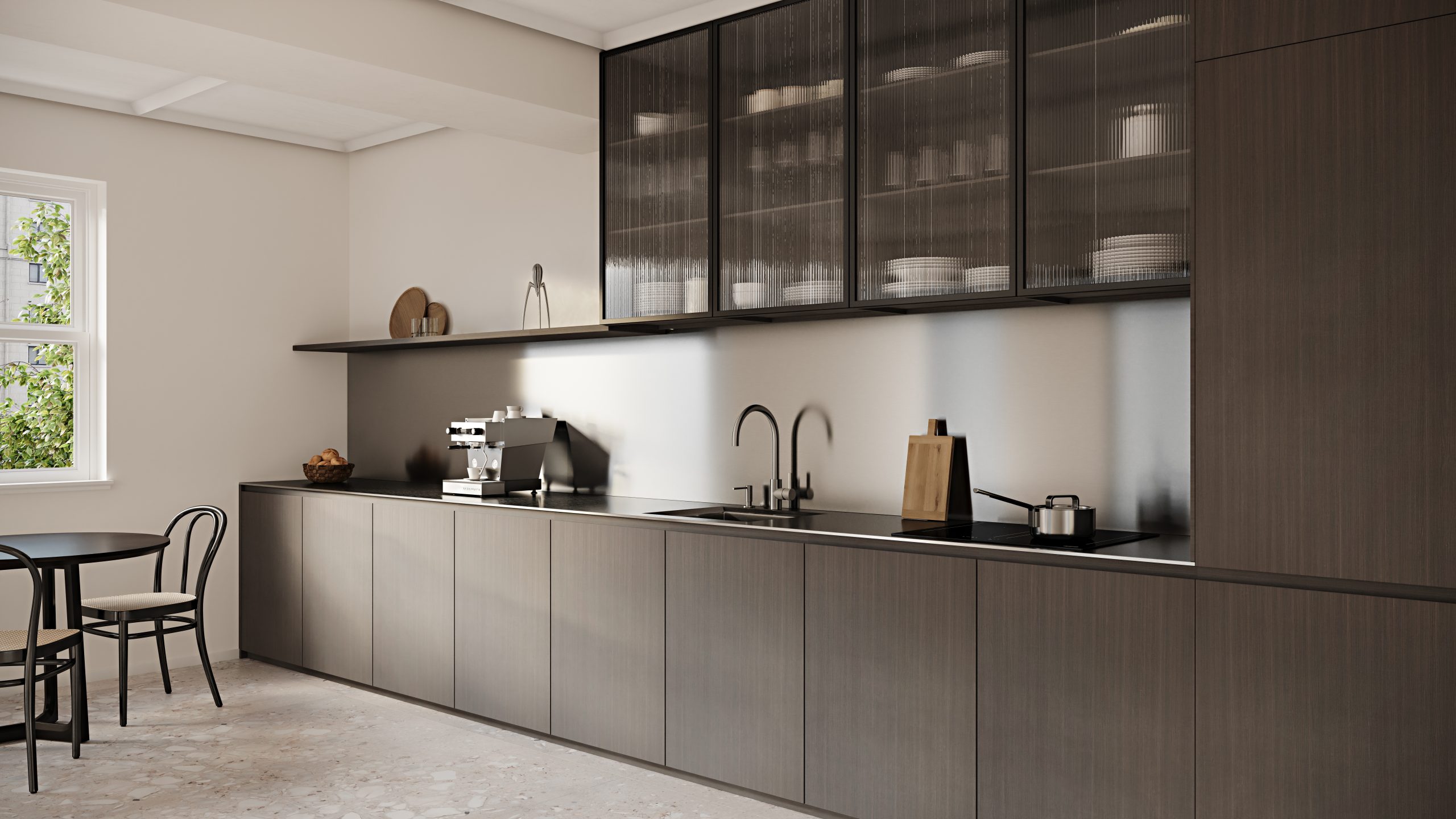
In the kitchen, open and partially open storage can break up long stretches of traditional cabinetry while creating opportunities to showcase favorite pieces. Cookbooks, ceramics, glassware, and serving pieces become part of the room rather than items tucked behind a door.
Rich finishes like Dark Cocoa can give this approach a warm, grounded feel, creating a sophisticated backdrop for the objects on display. Lighter, organic looks offer another interpretation, bringing softness and a natural quality to kitchens where storage and design work together.
The result is functional, but it also feels considered. Storage becomes another layer of the room’s visual composition.
Telling a Story Through Objects

Our homes are becoming increasingly personal, and what we choose to display can say just as much as the furniture, finishes, and colors around it.
A bookshelf filled with collected objects, favorite books, artwork, or meaningful pieces gives a room a sense of history. The “bookshelf” concept captures this idea particularly well in living spaces, where storage can serve as both an architectural feature and a place for personal expression.
Rather than filling every available inch, the focus is on choosing objects with purpose. A few well-placed pieces can make a space feel more individual while still maintaining a sense of calm.
Curated, Not Cluttered

On-display storage doesn’t mean everything needs to be visible. In fact, the trend works best when there is a balance between what is shown and what is tucked away.
Think of open storage as an opportunity to curate. Leaving breathing room between objects, repeating materials or colors, and varying the height and scale of displayed pieces can create visual interest without overwhelming the room. Closed cabinetry can still handle the less attractive necessities, while open areas highlight the things worth seeing.
This balance creates spaces that feel lived-in without feeling cluttered.
Mixing Materials and Forms

The evolution of display storage is also opening the door to more interesting material combinations. Wood shelving paired with metal frames can introduce an industrial edge, while floating boards offer a more minimal look. Modular systems can blur the line between furniture and architecture, adapting to the needs of the room while becoming a design feature of their own.
Ultimately, on-display storage reflects a larger shift in interiors: away from spaces that simply look pristine and toward spaces that feel personal, useful, and thoughtfully composed. When storage becomes part of the aesthetic, the objects we live with every day get a chance to help tell the story.
Ready to Specify Duramar?
Let's make it easy.
Need more inspiration?
-
Concealed backsplashes, paneled hidden closets, and integrated kitchen storage: how Duramar TFL and Laminates support today’s clutter-free interiors.
-
Concealed backsplashes, paneled hidden closets, and integrated kitchen storage: how Duramar TFL and Laminates support today’s clutter-free interiors.
-
Concealed backsplashes, paneled hidden closets, and integrated kitchen storage: how Duramar TFL and Laminates support today’s clutter-free interiors.
-
From Milan to your next project: 2025 interior trends to watch. A report by Duramar.
