Japanese Influence in Interiors: Designing with Intention, Calm and Character
Japanese design influence continues to shape modern interiors, but not through bold statements or decorative excess. Instead, it reveals itself through philosophy: a quieter approach to space, material, and mood.
Today’s designers aren’t simply borrowing a look. They’re embracing a mindset rooted in simplicity, nature, imperfection, and tranquility. These values pair naturally with the way contemporary interiors are evolving, and with how brands like Duramar think about surface design.
At the heart of this influence are four guiding principles: Kanso, Shizen, Wabi-sabi, and Seijaku. Together, they offer a framework for creating spaces that feel intentional, grounded, and timeless.
Kanso: The Beauty of Simplicity.
Kanso reflects the idea that less truly is more. It encourages removing unnecessary elements so that what remains feels purposeful and calm. Clean lines, thoughtful layouts, and restrained palettes allow each surface to stand on its own without visual clutter.
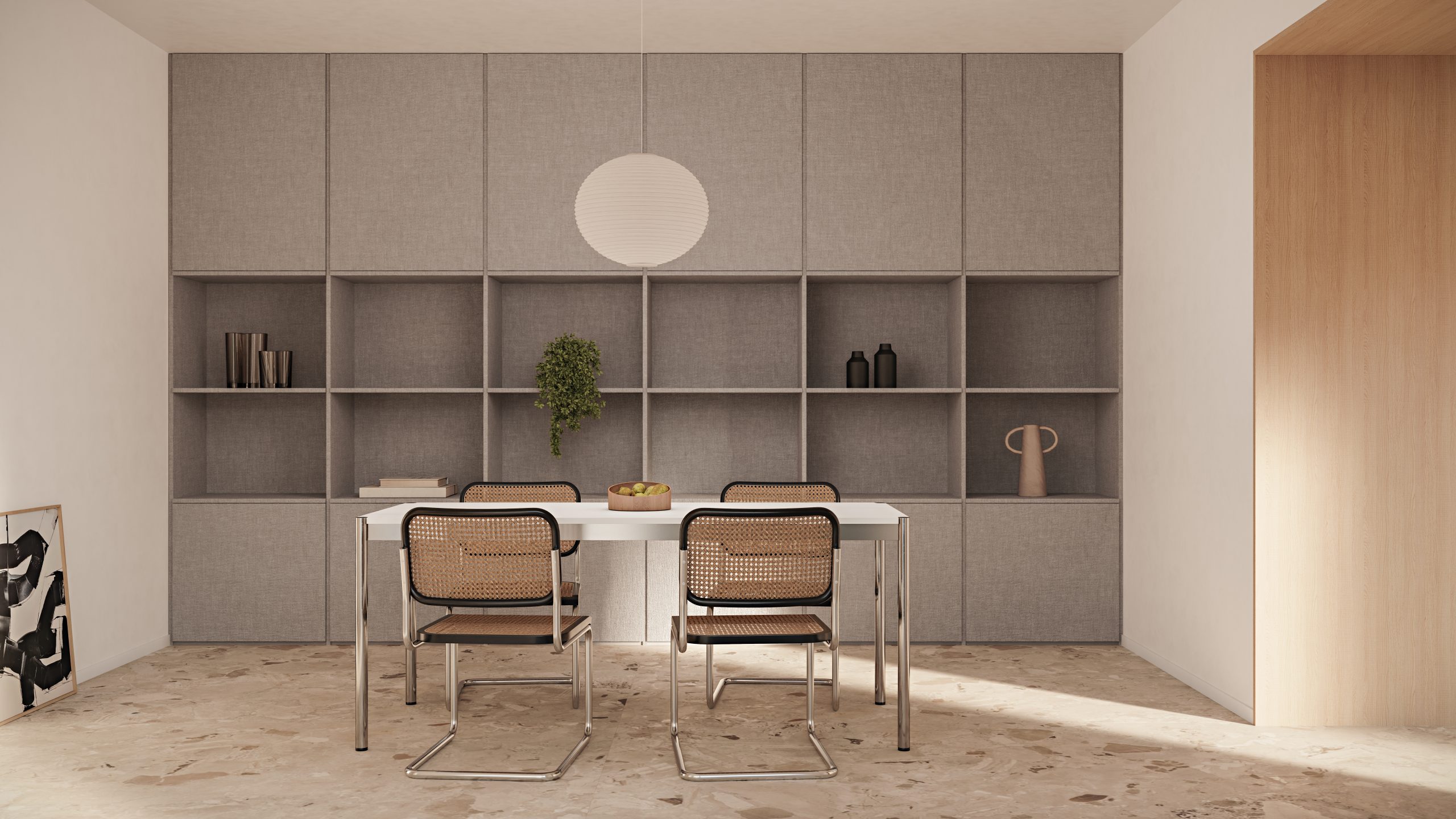
Rather than feeling empty, Kanso relies on materials with quiet character. Subtle variation, blended tones and refined texture allow surfaces to add depth without visual noise. Finishes like Ash Lino and Rift Oak support this balance, bringing warmth and personality through soft color transitions and natural grain. Used thoughtfully, they demonstrate how simplicity can feel intentional, expressive, and calm.
Studio with bookshelf and door frame made with Thermally Fused Laminate in Ash Lino and Rift Oak, respectively, by Duramar.
Shizen: Letting Nature Lead.
Shizen centers on naturalness and our connection to the environment. It shows up in the use of authentic textures, organic tones, and materials that reflect the outdoors rather than compete with it. Wood-inspired finishes, soft neutrals, and natural light all play key roles.
Faithful surface representation matters here: finishes that echo the subtle irregularities of real wood contribute to calm, grounded interiors. Duramar’s oak woodgrain collection (explore the full range here) — including options like Rift Oak and other oak decors — supports this approach with nuanced grain and soft, natural tone that complements Shizen-inspired spaces.
Wabi-sabi: Finding Beauty in Imperfection.
Wabi-sabi embraces subtle flaws, natural variation, and the character that develops over time. Instead of pursuing perfect uniformity, it honors the quiet beauty found in irregular grain patterns, tonal shifts, and gentle wear.
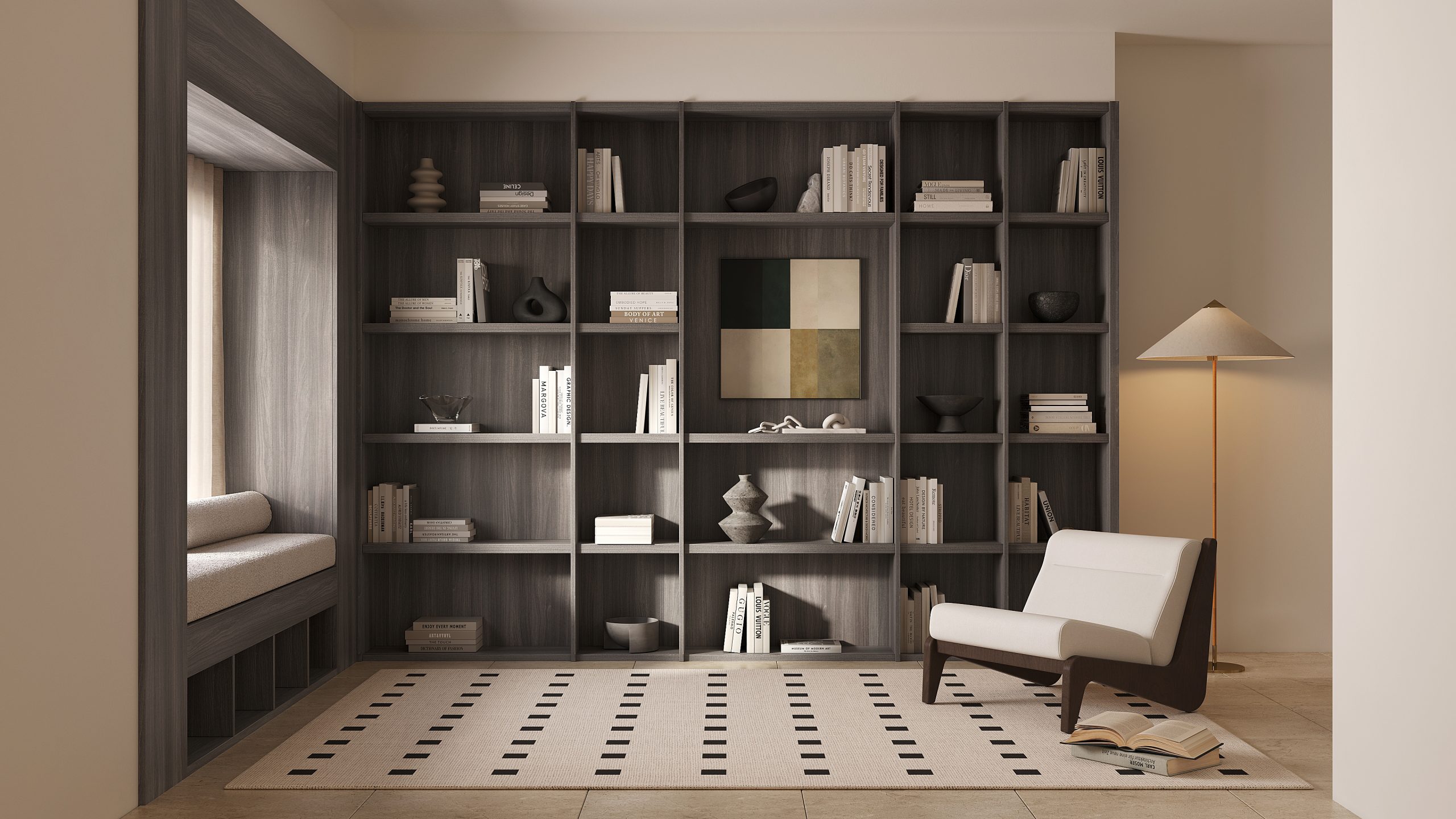
In today’s interiors, this principle favors materials that feel human and lived-in. Paired with décor made from natural materials and non-uniform shapes, Pewter Maple woodgrain adds subtle variation, allowing surfaces to age with character rather than perfection.
Studio with a bookshelf made with Thermally Fused Laminate in Pewter Maple woodgrain by Duramar.
Seijaku: Designing for Tranquility
Seijaku represents the emotional result of these principles working together. It’s the sense of calm created by balanced space, controlled contrast, and visual breathing room. Tranquility comes from what’s left out as much as what’s included.
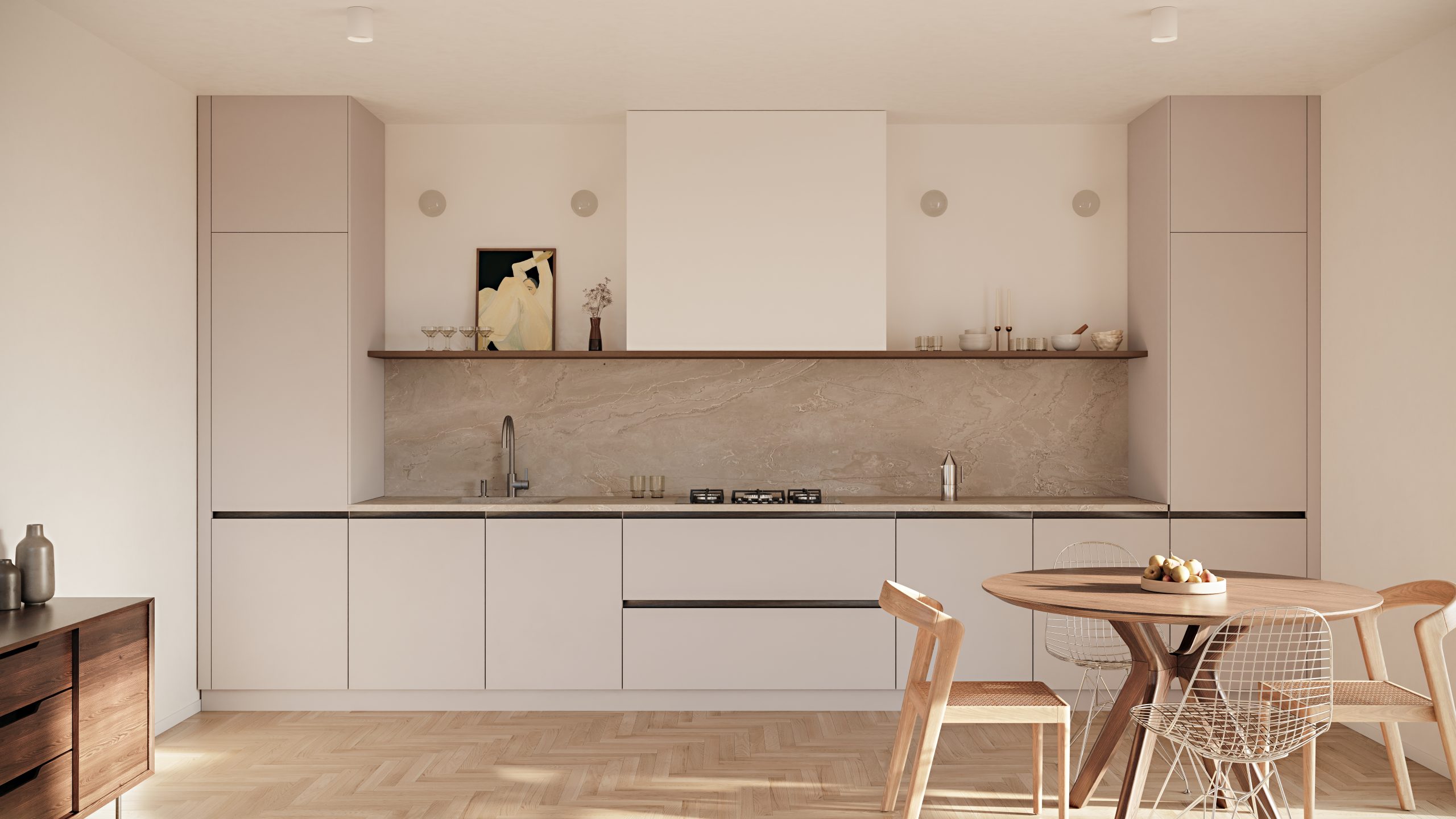
Quiet surfaces, low-sheen finishes, and a consistent material flow reduce visual noise, allowing the space to feel calm and balanced. Neutral tones from collections like Joshuaand Torreysupport this approach, creating environments that feel restorative, human, and intentionally restrained.
Kitchen cabinetry made with Thermally Fused Laminate in Joshua color by Duramar.
A Philosophy That Transcends Trends.
Japanese influence in interiors isn’t tied to a season or color cycle. It’s rooted in values that continue to shape how people want spaces to feel calm, honest, and intentional. These principles guide everything from layout to material selection.
Brands like Duramar support this philosophy not by chasing trends, but by offering surfaces that work quietly in the background with materials that let design intent speak first. When simplicity, nature, imperfection, and tranquility guide a space, the result feels balanced, timeless, and deeply considered.
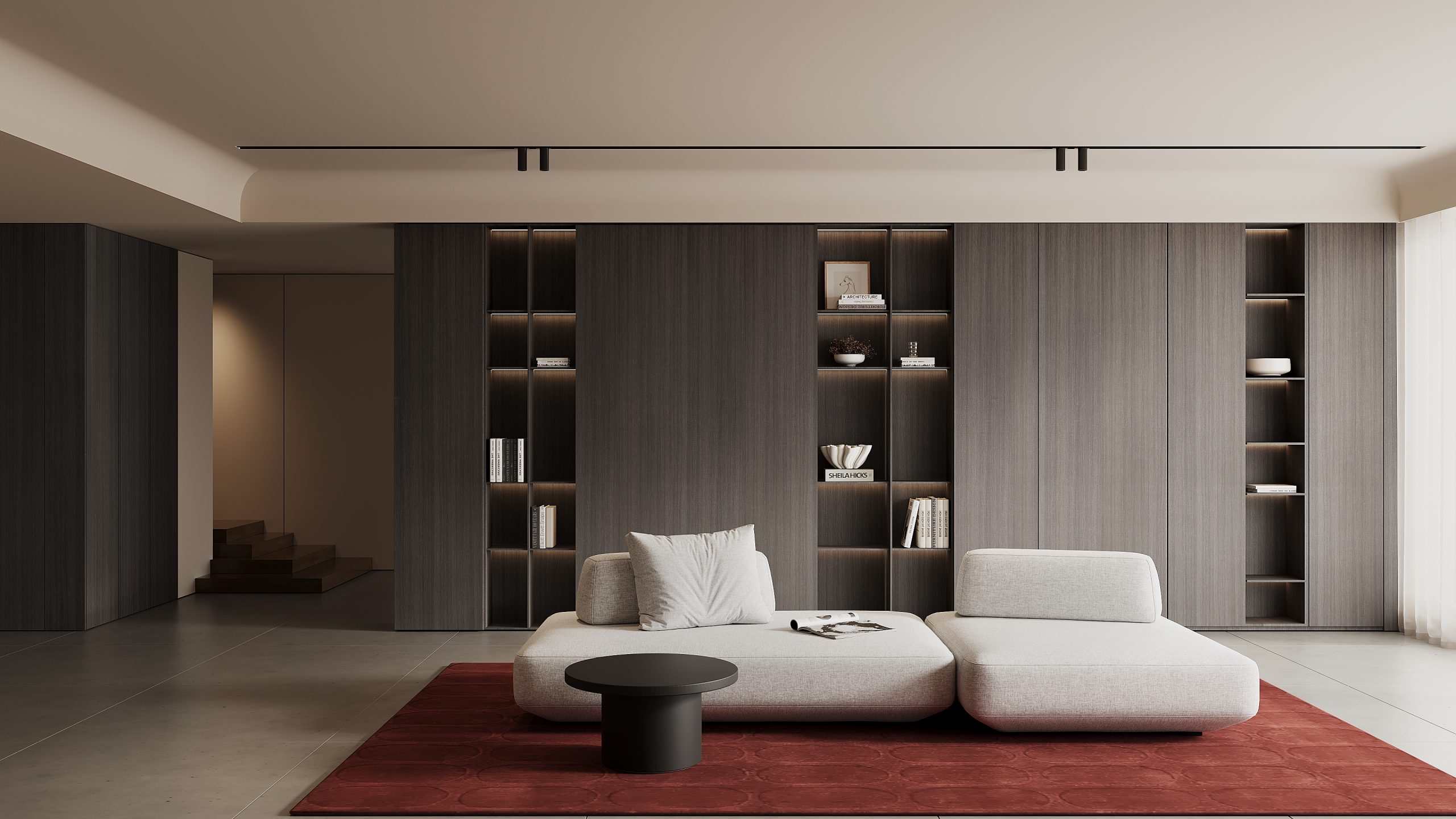
Living room with wall panels made with Thermally Fused Laminate in Midnight Mist woodgrain by Duramar.
Ready to specify our products? Request free samples of our colors, or connect with your Duramar rep to discuss custom sizing and project timelines.